

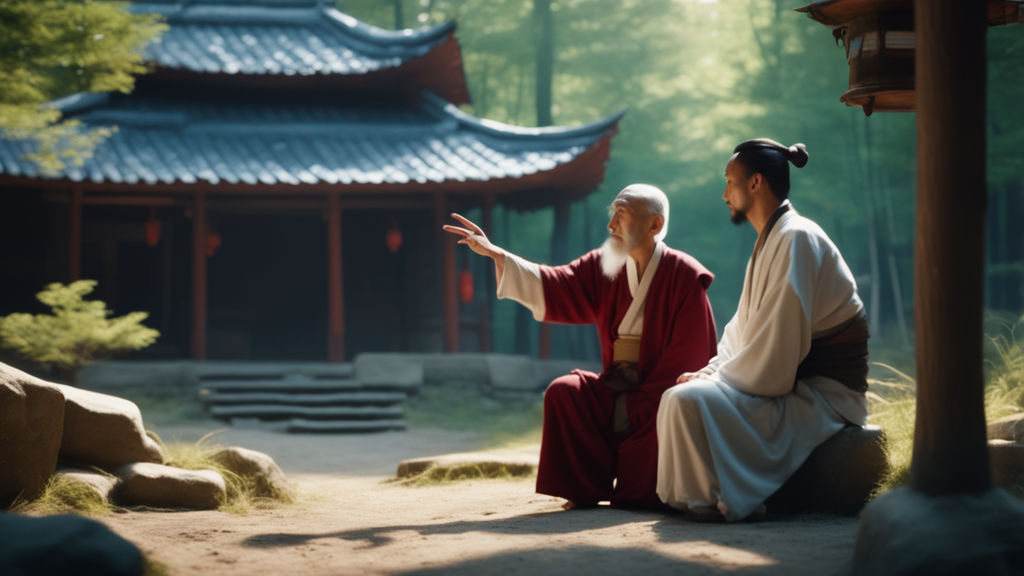
Obviously it is in the youthful period of life that we have most to gain from a thorough recognition of the instinctual side. A timely recognition of sexuality, for instance, can prevent that neurotic suppression of it which keeps a man unduly withdrawn from life, or else forces him into a wretched and unsuitable way of living with which he is bound to come into conflict. Proper recognition and appreciation of normal instincts leads the young person into life and entangles him with fate, thus involving him in life’s necessities and the consequent sacrifices and efforts through which his character is developed and his experience matured. For the mature person, however, the continued expansion of life is obviously not the right principle, because the descent towards life’s afternoon demands simplification, limitation, and intensification—in other words, individual culture. —- Carl Jung
The discovery of the value of human personality is reserved for a riper age. For the young people the search for personality values is very often a pretext for evading their biological duty. Conversely, the exaggerated longing of an older person for the sexual values of youth is a short-sighted and often cowardly evasion of a duty which demands recognition of the value of personality and submission to the hierarchy of cultural values. The young neurotic shrinks back in terror from the expansion of life’s duties, the old one from the dwindling of the treasures he has attained. — Carl Jung Psychological Reflections pg. 135
These two quotes by the Swiss Psychologist Carl Jung begin an interesting discussion about age and the proper phases of life fitted to it. Different things are demanded of the individual at a different age. One person’s trash is another man’s treasure is a good perspective to keep in mind.
A more social mindset is what Jung believes is best for “the young”; embracing their sexuality, adapting socially, becoming entangled with fate as they build their livelihoods and character. He then attaches a socially contracted mindset to older generations as they retire from the drive and adventure of their youth and turn their attention inward towards their souls.
Young:
I estimate the youthful people Jung speaks of are likely late teenagers and young adults. They are the youth who begin assuming greater responsibility over their lives in order to establish their independence. They feel the pressure of transitioning to adulthood as they leave the comforts of childhood behind. This is a pressure everyone must face and overcome.
Any society expects youth to engage with it; to study (books, trades, any skill), build a career, earn money, give back, build a family etc. These new responsibilities force the young to increase their efforts and their resilience to the pressures they feel. It is not easy for the young to no longer be dependent on the world when adults take care of all their needs. As a result, a force of will and determination is called out of their guts, heart, the spirit of the youth. It is their young Warrior.
Old:
They are the mature adults who are ripe with experience and knowledge. They are late in their careers, have mastered certain skills, and they know the value of work. They’ve achieved goals through engagement of society and fulfilled many responsibilities that were forced upon them when they were younger.
However, with their worldly responsibilities largely fulfilled, they begin to experience a slowing down of that journey. Such responsibilities begin to fade away, and their burdens begin to ease. Now, the old feel a need to retire from adulthood. The new chapter in their life of elder-hood dawns on them. A period where their worldly knowledge is no longer needed, but instead their time and attention turns towards their mind, heart, soul, spirit, etc. Retired from the warrior path, the new force that is called out of the guts, the heart, the spirit of the old is their Saint.
——————————-
In addition, another range of age that is to large to discuss is the time between the “young” and the “old.” More experienced youth but not quite fulfilled adults. Throughout that range, there is a shifting blend of the two outlooks; some on the younger side needing more of a young warriors active and social outlook, and some on the older side needing a more saintly, reflective outlook.
Lastly, because of different circumstances — different cultures — different times in history — and many other factors that cannot easily be discussed, the definition of “young” and “old” varies immensely. Different time periods in history and the different cultures that existed determined what the responsibilities of young and old were. Looking back at history and comparing it today, responsibilities of “young” and “old” have varied. If one only looks at the present, the responsibilities of “young” and “old” still vary greatly depending on where one grows up geographically, ones income level, ones culture, ones gender, ones handicap, etc.
The reader will have little problem in distinguishing in their own life when they are at their young and old stage, and how their personal situation is different than others, and how that changes their responsibilities at the transition stages for young and old.
I offer my opinion about which very general responsibilities the young and old can assume everywhere. The responsibilities of age I discuss cannot be made completely irrelevant. Everyone grows up and ages, and if one is lucky to grow old, one will certainly experience both transitions from childhood to adulthood, and adulthood to elder-hood.
My opinion is based upon by my upper-middle-class upbringing in the United States from 1993 to the present, all of the experiences of my life up to this point, and the books I’ve read which offer far more trustworthy opinions on which duties are best for which age groups.
———————————————–
Now, let us turn back to the opening quotation:
The discovery of the value of human personality is reserved for a riper age….
The riper age is closer to that of a mature adult, rather than a youth. The youth must save the discovery of the value of human personality, for later in life. At an unripe age, young people can’t be expected to discover the value of their personality; their uniqueness, maturity, skills…their overall wholeness and depth. At their age, only part of that wholesome personality are they able to discover, and the rest unfolds as they grow. What would a journey of discovery be if one obtained and knew their individual greatness so early in life? Only in a false world of self-delusion, where challenges do not exist and are not overcome, where one is self-righteous, does one obtain “greatness” as a young person.
The real world challenges us, and forces young people to take risks and make mistakes in order to discover their greatness, the value of their human personality. Thus they have every right to make mistakes and not be judged too harshly for it.
Older folk must have patience with youthful mistakes because it is the only means for young people to truly progress in discovering the value of their personality. They must give the youth time to make mistakes, and encourage them to find true success in overcoming struggles and persevering. By doing so older folk assist the youth in maturing into personalities full of depth and value.
Only over time and through trials can youth discover who they are. Any finger-waving preaching of adults who expect youth to be perfect does no good. Without mature guidance, the natural wish of youth to be a more valuable personality will be obstructed, and youth may begin to develop an inability to tolerate failure. Encourage the youth, don’t stick the finger in their face, or else they won’t accomplish anything.
Now there are cases when youth will cease to truly fight and make mistakes and will seek to obtain personality values without having gone through the necessary trials and tests. This is simply vanity and self-righteousness. They believe they are mature and wholesome when they truly won’t put in the effort to overcome great trials of age. In their impatience, youth may obsessively search for their wholesome self. If this happens, youth trick themselves into believing they are great, wholesome personalities, and they use this fantasy as an excuse to not truly do the work needed to mature and discover themselves. A young warrior searching for completion this way is confused, and they will slack in their inner fighting spirit. Becoming a wholesome saint without being a warrior first? Impossible.
So what is the right course for the youth?….. For young people to fight for their experiences in life as warriors! They must experience new things with courage and make mistakes! Not to be reckless and harm things around them, but to maintain the courage and daring of youth. They must not let go of the inner child which loves to give their fullest effort when trying new things.
Think of how a new baby love to climb stairs for the first time…THAT is what young adults must do, and they must embrace failure when it comes. To keep trying and failing, and not expecting to be perfect when so young is the right course for them. Their reward is winning their personality for themselves.
Now, if they do not fight, they will not overcome and become a personality. If they do not become a personality, they will have nothing with which to make wholesome. Thus to lose ones fighting spirit when so young is a tragedy and must be avoided at all costs. A youth must also not grow lazy and delude themselves into thinking their maturity can be obtained without great effort and struggle.
————————————
Imagine a young warrior who fought many battles, won and lost many, but nevertheless never gave up. Now they are old, matured, and wiser after so long and hard a journey. For this old person, the warrior outlook is no longer appropriate. There is now a duty which demands recognition of the value of personality and submission to the hierarchy of cultural values. They are at the ripe age where they can, and must, search for a deeper value in their personality. Having committed to life and gained much experience, their job is to focus now on refining the personality they’ve become, and make it wholesome. Their use to the world as a warrior has past, and a new usefulness dawns on them.
These experienced, mature warriors — instead of continuing their path as the master warriors they are —- must evolve into greater saints. Not truly perfect, but morally, spiritually more competent leaders. Instead of facing the world outward as they have, they turn inwards towards their own hearts-minds-souls, to refine them through study of great knowledge and wisdom.
Through this new effort, they will evolve into competent teachers. They will first teach the young the warrior way, and along that path, they will temper and restrain youthful warriors with some saintly wisdom. Young warriors won’t feel a pressure to search for personality values. Why? Their elder-teachers will encourage them to pursue the warrior way, and will not allow the youth to search for personality values and avoid the struggle of growing up and maturing. This path will create trust and respect between the old warrior-saints and the young warriors.
If old-warriors fail to turn inwards and refine their matured warrior, then who will be the source of saintly wisdom for the youth? If all we have are warriors who have nothing to fight for anymore and do not refine their warrior personality with wisdom, then these old warriors will not encourage the youth to become skilled warriors, but rather will grow envious of the youth who have the life ahead of them to fight for! We do not want old warriors clinging to their old ways, fighting on and on at their older age. Refinement of themselves is their new task, their new fight if you will.
With old warriors not turning towards sainthood, the young will seek the wisdom as an excuse to not become warriors. They will avoid the fight because they preach some higher fight they are not prepared for. They will see the old warriors having no desire to discover saintliness, no spiritual fight or refinement, no learning from wisdom. So, the young will take up that fight, preaching they are doing it for good, but really because they don’t want to fight as warriors. The first fault lies with the old warriors who won’t take up the study of wisdom and the refinement of their souls. The second fault lies with the youths reaction to their elders incompetence.
Both the old and young crave that higher, wiser, saintly goodness, as we all do. But it is quite pre-mature for youth to expect to be such saints before they have fought as warriors for their own safety and prosperity in a unforgiving world. The experience in such a fight is an absolute necessity.
So the old-warriors must stand as both the example of a warrior, and become a source of saintly wisdom. If they fail, they not only fair themselves, they fail the youth. They must mature into saints, so the youth will feel comfortable being warriors without saintliness, as their elders have the saintliness on lock.
——————-
It is good for old-mature warriors to evolve into saints, while young apprentice-warriors mature into true warriors. It is bad for the old to shun the saintly path, rely on their warrior ways, and teach the young only war, while the young to shun the warrior path and try to be saints.
You can determine where you are in life, and which way – the warrior or the saint – is demanding that you mature. We all face this problem of having the right outlook and compass in life at the right age.
The young neurotic shrinks back in terror from the expansion of life’s duties, the old one from the dwindling of the treasures he has attained.
And we are all are tempted to shirk the duties our age demands of us.
————————-
Let us first expand upon the duties of old warriors who must practice sainthood
We now know it is not on young people to be wholesome personalities who are mature and ready for wisdom, but that it is the strict requirement of older folk whose were once useful to society. They have won their battles and attained their piece of the pie. So what do they do now? They strive for their peace of mind.
How do they obtain this?…….There are many different ways I’m sure, however, all are required to consult, and no one can succeed without, assistance from old knowledge. This is the wisdom passed down throughout the ages in books. Books are relics of the past. Ruins, bones, artifacts, are also relicts of the past, and can teach us many things about past civilizations, species, etc.. However, books are written with the intent of an author. Past authors speak not only to those they lived with, but meant for their writing to reach us, the future generations that could benefit. Certain authors try to warn the future. They teach us who are alive today and those after us, about what succeeded in the past, what was considered good, right, best, etc., what past generations failed to do or were doing wrong, what was considered bad, foolish, ignorant. In the form of books, the past becomes a means to fix problems now, and even in the future. Some books remain relevant generation after generation.
So why must the old seek this knowledge at their later stage in life? Because this GREAT knowledge was too difficult to read and apply throughout most of their life. It takes great time and effort to do so because this old wisdom demands one be more perfect. As the old were fighting for the lives from their youth to where they are now, they used their spare time to enjoy time off from the struggle. Their families, careers, and personal needs filled much of their time, so the perfection demanded by wise books was simply too much. However, now as the older person ends the more active phase of their life, now they do have time to take up study of this wisdom. With time, savings, support, and hopefully good health, older folk have the duty to seek wisdom, and apply it to their lives To some degree, they must do this.
Now they surely acquired other kinds of wisdom and knowledge throughout their journey surely, but it is in their later years that they must dedicate themselves to the greatest wisdom and knowledge of books of the past and combine it with what they’ve learned in life. If and when they apply it to their lives, they will become the competent teachers needed to guide and inspire the youth.
Now as competent teachers, they provide the blooming warrior-youth primarily with lessons of the warrior path, and secondly with lessons of great wisdom. Elders first inspire energy in the youth, and then direct it with wisdom. The young are still parented by elders, except in a higher sense. No longer physically parented with food, water, shelter, they young warriors are spiritually, mentally parented, while they go win their other needs for themselves. Elders help youth understand their limits and potential — of mind, heart, soul, body. They teach the youth the potential of their warrior spirit, and the limits of their wisdom.
The task of becoming wise is as hard for old people as embracing a scary world is for the youth. It is a new duty of life, a new phase, a new journey, and takes great courage to begin. Even when started, it is very difficult work for older folk to rid themselves of the corrupting habits gained throughout their warrior life. There is no time for them to childishly be melancholic about the treasures they have attained, spending time trying to relive their youthful-warrior days. Nor are they allowed to be envious of the new youth. If the old do not gain in wisdom, they become another obstacle to the success of the youth. The youth won’t have a source of wisdom to be there them, and thus they will seek the wisdom prematurely themselves. Yet if the old complement their strong, hearty, mature warrior with the great classical wisdom of various cultures, they become a true pillar of support for struggling youth. The youth will seek only the warrior path for now, as they have their wise elders to guide them. So the old must mature into saints. Not be perfect, but certainly better and wiser.
——————————————————————–
Now, what are the duties of the youth if not to turn inwards towards cultivation of greater saintliness?
Since the youth are not first required to focus their energies on living wisdom, they are first and foremost required to greet life’s duties with courage, and preserver in carrying them out. Their attitude must be filled with more courage, enthusiasm, and curiosity than fear. In this embrace of outward, courageous energy, they must accept that the mistakes they will certainly make are okay — that painful conflict with the world and even others is a necessary part of life’s journey. With this positivity and acceptance of conflict and hardship, they will turn outward to face the world, and not too far inward to face their young, trembling, incomplete souls.
This is not to say that introversion away from the world is bad. No, not ever would we want to be without introversion. It is to say that young people are not equipped to be primarily occupied with internal battles vs. their battles for to succeed in life. They will always have internal battles along the way, and these are extremely important to their success and happiness. However, these struggles can only be resolved with great assistance from older folk, and the young man or woman cannot alone devote themselves to perfecting this inner sanctum at the expense of their outward journey in the world. Time is not on their side to try and fight the inner fight. The world does not give them their place in it, nor will it hand them what they need. They are charged with being a fighter, a warrior, to commit with their whole heart-mind-soul in greeting and living in the world. Only then can they rightfully establish their place in it, and secure the time they’ll need to truly fight inner battles.
Without the aid of this courage and enthusiasm, Carl Jung says the young neurotic shrinks back in terror from the expansion of life’s duties: they will cling to childish attitudes which turn away from adult life out of fear, will make excuses for not embracing this new role, will not work for themselves and their kin, and overall will not become a healthy, independent person. The youth cannot be, and would never wish to be in this paralyzing position. It holds a young person back from taking on their life with heroic courage, and waste their time in useless struggles.
Furthermore, Jung claims it is the young adult’s biological duty to become an independent person that is able to first take care of themselves, find a partner, and help continue the human race by having and supporting children. Not only do I agree it is a duty for young people to (at the very least) give it their all to find love and multiply, but it is truly a spiritual, psychological, biological thrill to take on the world and find love! This is one of life’s great challenges, and no-one should deprive themselves of the possibility of great victory.
Not only must the young begin to establish their lives, but must do so in order to eventually create conditions to bring forth other life.
————————————-
Since the young person is required to establish themselves and contribute their part to the world, how does the old, great, and wise knowledge fit into their busy lives?
There is a part for this wisdom, however it plays a smaller and secondary part to the active outlook they need as warriors. The great wisdom should not be the King and Queen ruling men and women, but the great advisors to them. Wisdom cannot be the warrior spirit the young need, but only the saint that advises them. The young cannot be the wise yet, but can be the great-elementary students to wisdom. Therein lies the role the elders play for the youth. They teach the youth on behalf of wisdom.
Older folk have the duty to teach the youth how to be courageous warriors and win their place in the world, as well as basic principles of great wisdom. They are there to encourage and inspire youth to battle, to instill good ideals in their young hearts, to correct them when they make big mistakes, and be a source of council when the youth seeks or needs it. The aim is to ensure the young keep there tough guts and don’t give up on life, and slowly begin to grow strong in the ways of wisdom. To make sure they are warriors first and foremost, and grow saintliness to support.
——————————————————————–
I speak from personal experience that reading stores of great knowledge and trying to live them as a young adult, is impossible and extremely painful. Excessive concerns over wisdom draws us away from people, from the world, from competing and establishing ourselves. The only thing that becomes important is the wisdom, and all else it at its expense. We appears very awkward trying to be so good when we haven’t learned to fight and go after our dreams….
I have also experienced the truth that the search for personality values is very often a pretext for evading their biological duty. As I searched for personality values in books, I was not genuinely searching to make myself a good person, but was using this quest for knowledge as a cover while I shrank away from life. I did not live with courage and enthusiasm and endurance, but fear and apathy and a weak will. I was not growing up and winning my place in the world, or having a spouse and family and continuing life. I was isolating myself in books.
This disposition was a heavy and confused introversion, a depression, that believed wise perfection was the appropriate path. Through this disposition I sought all the personality values Carl Jung speaks of, rather than living life with embracing arms. I convinced myself this quest for knowledge, wisdom, sainthood would compensate for living life. I distracted myself from facing my fears of living and growing up, by instead believing I was becoming great by reading all this knowledge. I substituted reading and study for living. In reality, I was little more than a fearful young man, a nice guy, spineless and submissive, holding onto childhood, refusing to grow up and accept responsibility for myself. Although I picked up much knowledge along the way by reading great books, I had no spine, no guts, no will, no instinct, no heart to LIVE the knowledge. I was a amateur saint, and underdeveloped warrior. First ensure the will to live, then seek to implement wisdom.
Some good that has come of my excessive study includes a few quotes pertaining to this topic of Old Saints and Young Warriors .Quotes about doing, living, being, acting vs. not truly doing, living, being, acting but making many excuses……..
The weakest of all weak things is a virtue which has not been tested in the fire.
―from “The Man That Corrupted Hadleyburg” by Mark Twain
Instead of acquiring virtues, get acquainted with the fire. This is why young warriors need only bits and pieces of wisdom given to them by elders, so they’ll have enough energy to live them out in the world. Too many virtues confuse the youth about what to do, and will breed habits of inaction. One will have the virtues, but be unable to live them in the world and forge them into personality and character. This makes one weak.
These virtues are what a young person may acquire prematurely from great books. When I gathered them, I did not also have courage to live, but only fear. I could not even test them in the fire. Slowly, I became a hoarder of these virtues, and lost the power to forged anything in the fire, let alone the ideas of these virtues. While I read and understood good things, I was with no will, no foundation to be these virtues in action in time and space. They were next to useless.
Thankfully, at any time, I, you, anyone can take steps towards winning their dreams by acting with courage, taking chances, failing, and to keep persevering. Test your self in the fire, the world. Be a warrior, put to the test.
—————————————
No! Try not. Do, or do not. There is no try – Yoda from Star Wars
This quote is applicable to both the old saints and the young warriors.
Simple. We do not say we tried, quit, and continue to hold on to this hollow excuse. We do again, and again, and again. Changing our tactics, learning, and keeping faith in our efforts. To try is to try, give up, and then whine. To do, is to try, not give up, and trust that our persistence and perseverance will bring good results.
—————————————–
Neo, sooner or later you’re going to realize, just as I did, there’s a difference between knowing the path and walking the path – Morpheus from The Matrix
For both young and old:
For the youth, we cannot simply know we must seize the day, win our lives for ourselves, and have courage, faith, and hope……We must walk that path, and get hurt on our way to victory. Do not hesitate when you are young. Go!
For the old, one cannot merely know they must become wise in order to guide the youth, they must actively acquire the knowledge that is meant for them at their time. In addition, they must embody it, live it, demonstrate it for the youth, or at least explain such knowledge to them and guide them in the right direction.
There is a critical difference between knowing what one should do, and actually doing one’s best.
————————————————————————————————————————–
The Master said: ‘Can one avoid concurring with exemplary sayings? But to make them the basis of self-improvement is considered the most valuable thing. Can one avoid being pleased with blandishments? But to unravel the motivation is considered the most valuable thing. If someone is pleased but does not unravel the motivation, concurs but does not improve himself, I can do nothing for him at all.’ – Confucius The Analects Book 9:24
If the old warrior-saints read and understand great knowledge, but don’t find motivation to act, don’t improve themselves through application of the knowledge, what good is the knowledge? One can’t merely be pleased and concur with a correct statement. To live it, to have it motivate you to move, to improve yourself—that is considered the most valuable thing.
If the old warrior-saints implement their knowledge, they stand as a primary example for the young warriors. They will show the youth that it is the action, the application, the movement, the follow through that is the most valuable thing.
—————————————–
Life is a touchstone for the truth of the spirit. Spirit that drags a man away from life, seeking fulfillment only in itself, is a false spirit though the man too is to blame, since he can choose whether he will give himself up to this spirit or not. Life and spirit are two powers or necessities between which man is placed. Spirit gives meaning to his life, and the possibility of its greatest development. But life is essential to spirit, since its truth is nothing if it cannot live. – Carl Jung
This is mainly for the young warriors, yet can apply to the old warrior-saints too.
Beware of this spirit. It is premature sainthood. It does not wish for you to win, but for itself to win. It is a consuming cleverness which will drain all your great energy. It is the opposite of action and competing for ones place in the world.
The wise truths I found in books became an unhealthy spirit that dragged me away from life. It sought only its own perfection, not for me to live it out in the world and forge it into experience and character. I chose to surrender myself to this spirit, and I gave life no attention. It was perfection in the mind, the ideal. This spirit certainly gave meaning to my life, and has given me possibilities of my greatest development….however, such development is the action, is me alive in the world, having the spirit with me in life. The spirit cannot act alone, it only turns inward, like a beast crawling into a cave. Living life is the only way this spirit can become anything. Is is the body for the spirit. Without life, a body, me, living, the spirit is powerless, nothing, and begins to consume me. It remains nothing but an idea, dust in the wind.
—————————————–
In summary and conclusion, the beginning of adulthood does not require one to worry about being perfectly good, but more importantly to be courageous, ready to take chances, to fail, and to try again. Youth must go after their dreams by working hard for them, by fighting for them as warriors.
The end of adulthood, and the beginning of elder-hood, requires matured warriors to then mature into saints. They are charged with studying the old and great knowledge, to grow (more) wise, peaceful, content, and then embody and live out that knowledge in order to competently guide the youth. Thus they fulfill their role as teachers of the young warriors. Old folk are charged with keeping the old knowledge warm, to help the young folk understand the new world they are growing up in.
Lastly, any age in between the beginning and end of adulthood will accord with the amount of warrior spirit or saintly spirit one needs. An adult in their thirties still has to keep at being a warrior, and keep simple wisdom as a part of their lives. An adult in their forties still has to keep at being a warrior, but should be expected to begin deepening their understanding of the saintly path. An adult in their fifties starts to have more and more time for the saintly path, and less of a need to be a warrior. And so on. I believe anyone is capable of understanding what their age demands.
I am 30 years old and still youthful. Let us young people first become great warriors with saint as our teachers. Let us later, and only later, be the mature warriors that turns our work inward towards becoming saints. Then we will bless our children, and grand children after us, as we help them along their paths. We first become warriors our elders expect and our world needs, then become saints the future young warriors and world will need.
Pick up your swords and shields young warriors! Let us feel the molten core of fire in your fearless will! Let us see the might of your hands at work to build this world.
Hang up your weapons old saints, and lean on your new staffs. Let us hear your hard yet soft spoken wisdom. Retire to the wise path and guide us as we fight for survival and success.
———————————–
 KEEP THE OLD WARM
Leave a comment